

Introduction
Testicular torsion in a child is a time-critical urological emergency that requires prompt recognition and surgical intervention. Delay in diagnosis and treatment can result in irreversible testicular ischaemia and loss of the affected testis. We report a case of a 10-year-old boy from a remote village who presented more than 72 hours after the onset of acute left scrotal pain. The case highlights the challenges of delayed presentation, the role of colour Doppler ultrasonography and the importance of timely referral and surgical management in paediatric testicular torsion.
Case Presentation
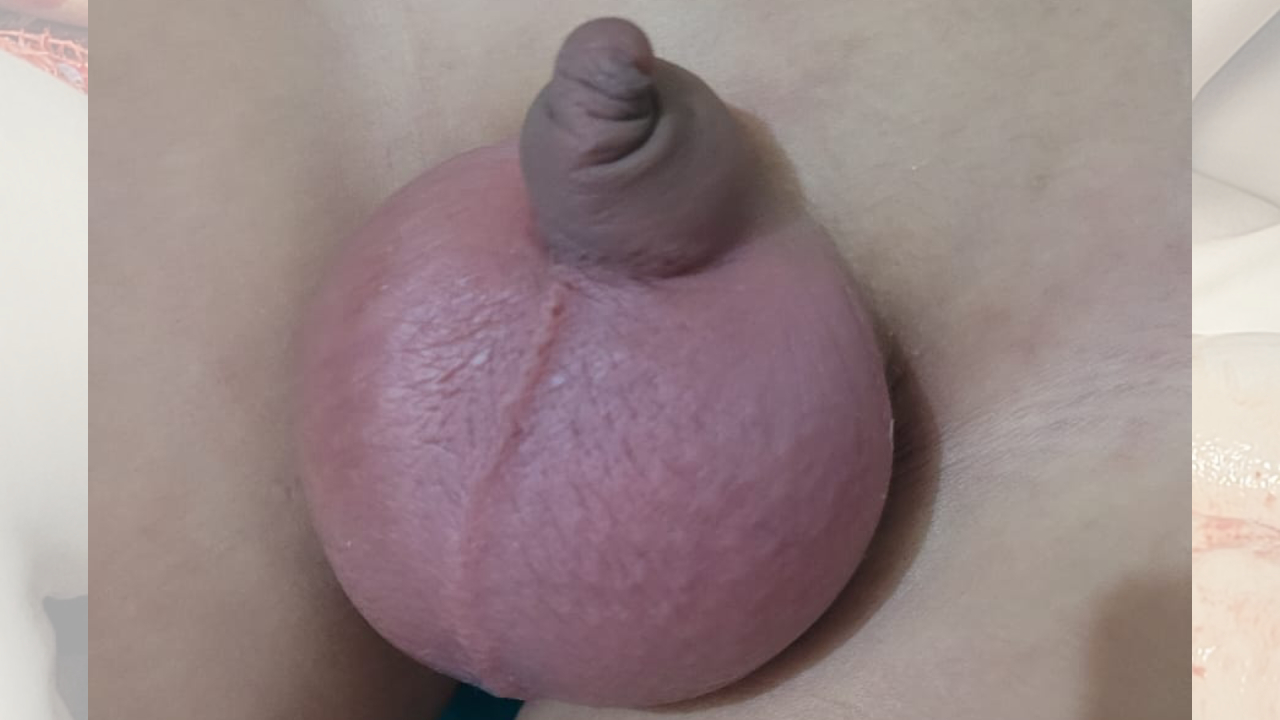
A 10-year-old boy from a remote village presented to Healing Touch Hospital, Pithoragarh, with a history of acute left scrotal pain lasting more than 72 hours. The pain had started suddenly while getting out of bed. Initially, local analgesic treatment was sought, but definitive medical evaluation was delayed because of difficult road access and adverse weather conditions.
Clinical Examination
The child had a history of nausea and vomiting on the first day of illness. There was no appreciable history of fever. By the time of presentation, the prolonged duration of symptoms raised serious concern regarding the viability of the affected testis.
Colour Doppler Findings
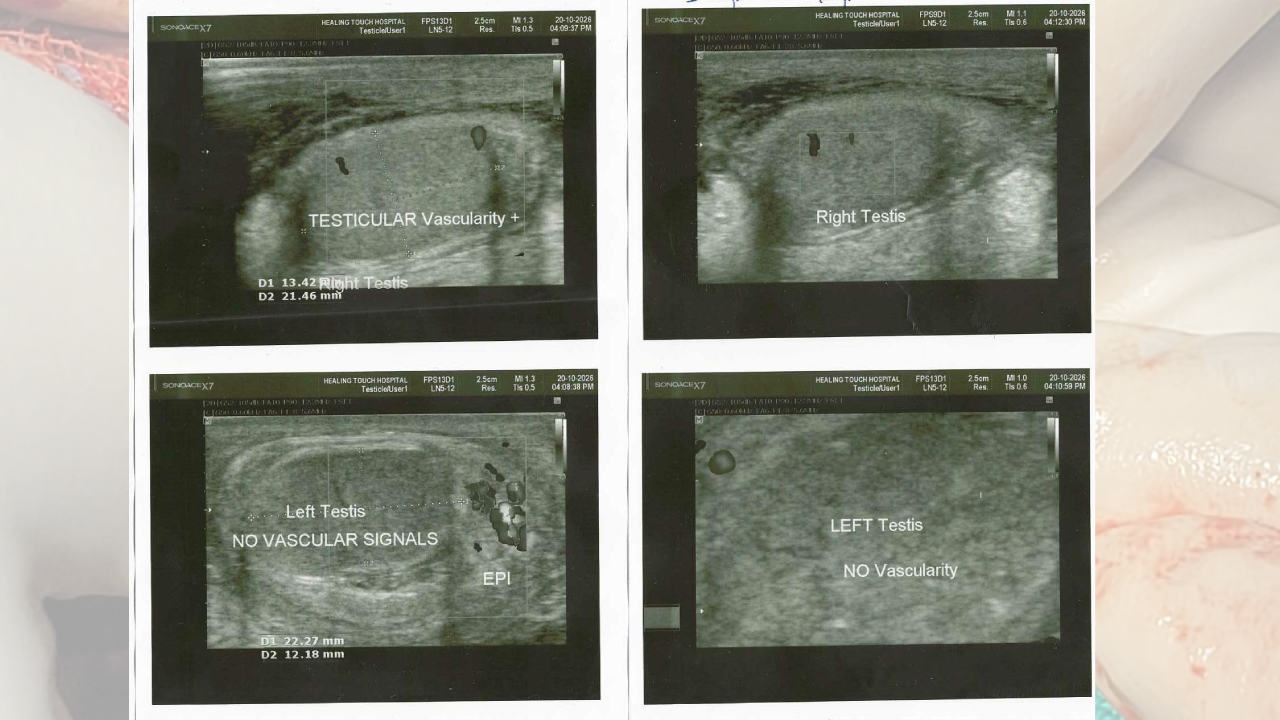
Colour Doppler ultrasonography of the scrotum demonstrated absent vascularity within the left testis, indicating severely compromised or absent testicular perfusion. Vascularity in the right testis was preserved. The findings were highly suggestive of left testicular torsion with probable non-viability of the affected testis.
Surgical Management
In view of the prolonged duration of symptoms and absent vascularity in the left testis on colour Doppler examination, emergency surgical exploration was undertaken. Exploration revealed a gangrenous left testis with a 720° (two complete anticlockwise rotations) twist of the spermatic cord.
As the left testis was non-viable, left orchidectomy was performed. Prophylactic right orchidopexy was also performed by fixing the right testis within a newly created subdartos pouch using 3-0 Vicryl sutures.
Intraoperative Findings
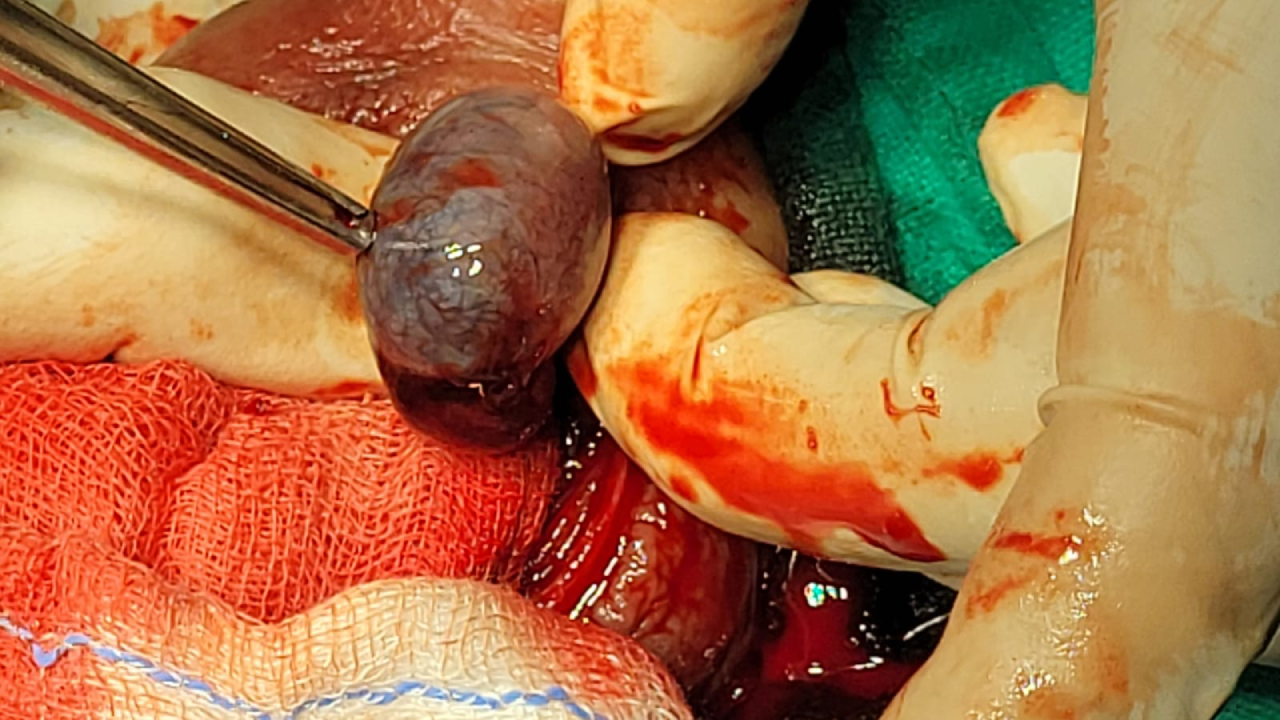
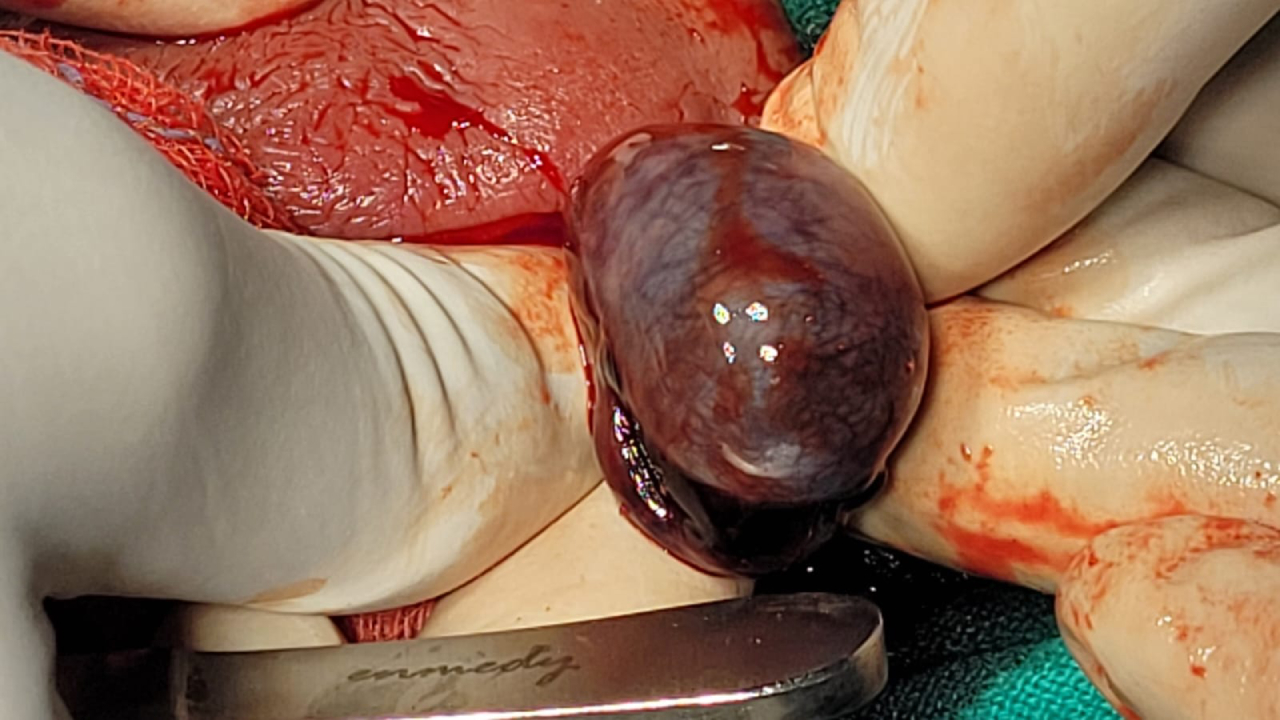
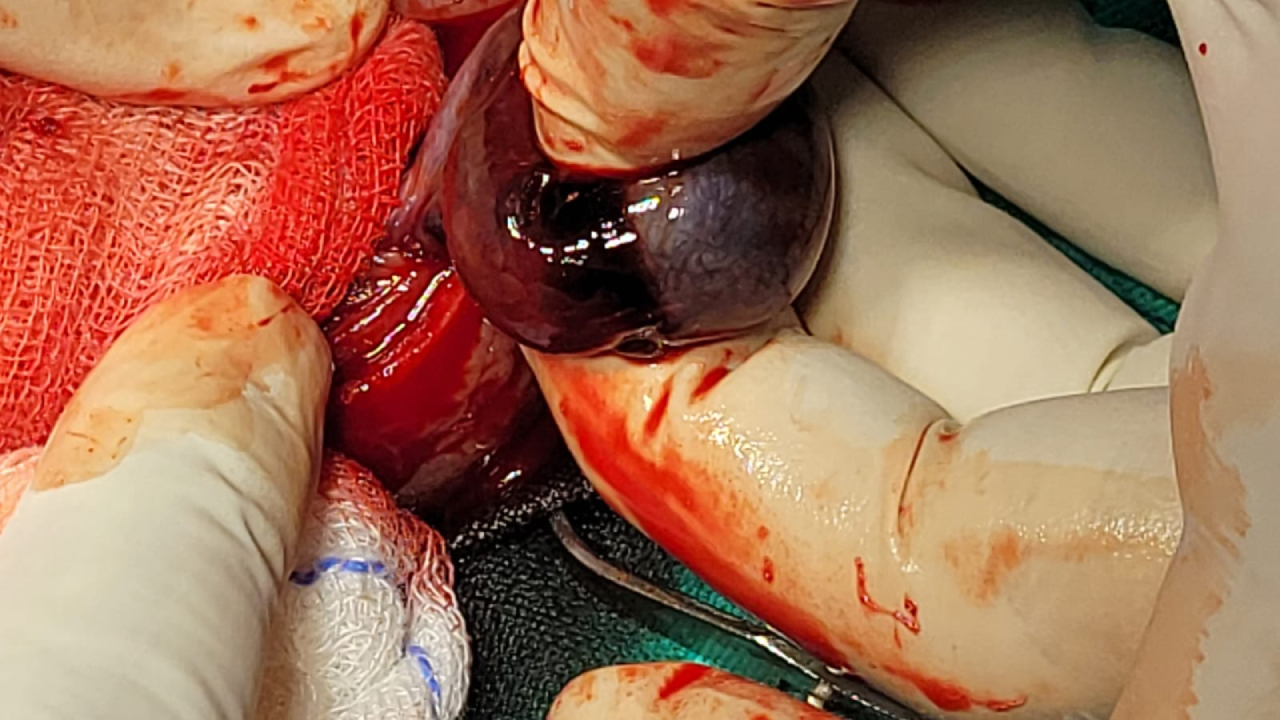
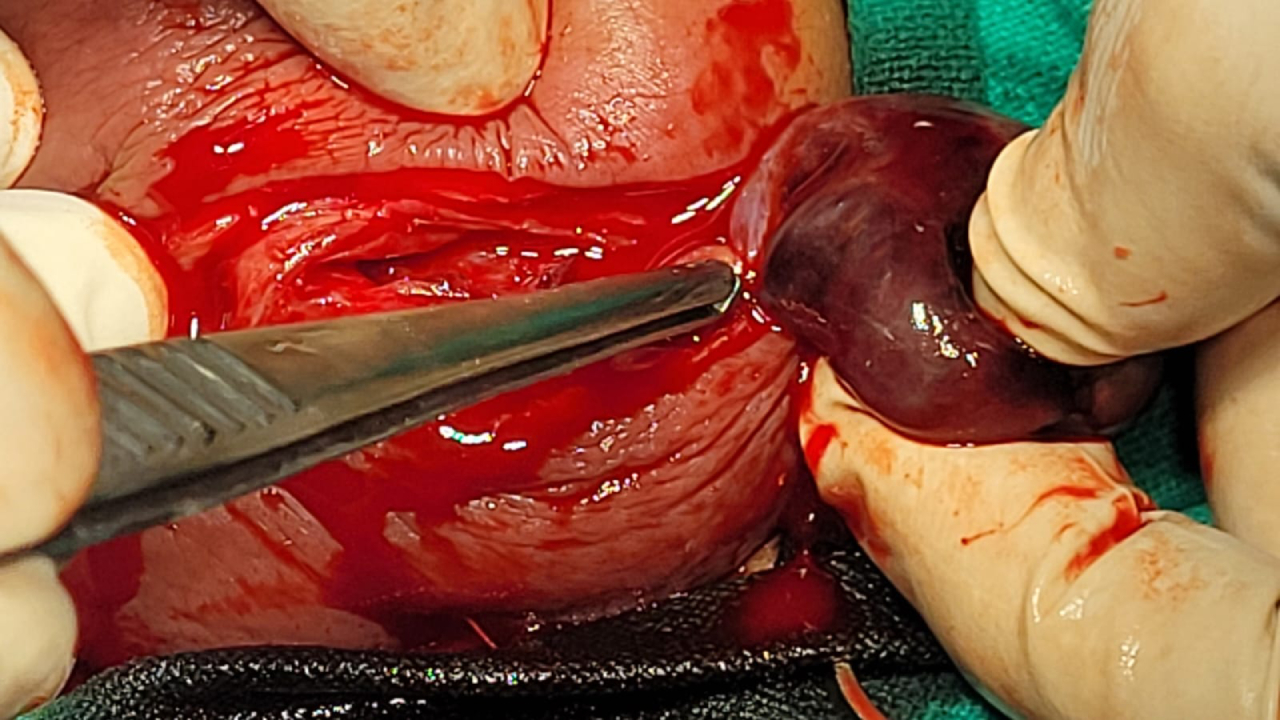
Intraoperative photographs demonstrating the gangrenous left testis and 720° torsion of the spermatic cord.
Postoperative Course
The postoperative recovery was uneventful. The child remained clinically stable, with no reported postoperative complications. He was discharged on the third postoperative day in satisfactory condition, with appropriate postoperative advice and follow-up recommendations.
Discussion
Testicular torsion is a surgical emergency caused by twisting of the spermatic cord, resulting in impaired testicular blood supply. The degree and duration of torsion are important determinants of testicular viability. Early diagnosis and prompt surgical intervention offer the best opportunity for testicular salvage [1,4,5].
In this case, the child presented more than 72 hours after symptom onset. Difficult geographical access, adverse weather conditions and initial treatment with analgesics contributed to the delay in definitive management. The absent vascularity on colour Doppler examination, together with the operative finding of a gangrenous testis, confirmed irreversible testicular damage.
Colour Doppler ultrasonography is a valuable investigation in suspected testicular torsion. However, it should not delay surgical exploration when clinical suspicion is high [1-3].
When testicular torsion is confirmed, fixation of the contralateral testis is also recommended to reduce the risk of subsequent torsion. In this case, right orchidopexy was performed following removal of the non-viable left testis [1,4].
Clinical Lessons
This case highlights several important clinical lessons:
Testicular torsion must be considered in every child presenting with acute scrotal pain.
Early recognition and urgent referral are essential to improve testicular salvage.
Difficult geographical access and adverse weather conditions can contribute to delays in emergency surgical care.
Colour Doppler ultrasonography can help assess testicular perfusion, but should not delay surgery when torsion is strongly suspected.
Contralateral orchidopexy is an important component of surgical management.
Improving awareness among parents, primary healthcare providers and communities in remote areas may help reduce delays in presentation and referral.
Conclusion
Testicular torsion is a time-sensitive surgical emergency in children. Delayed presentation can result in irreversible testicular loss despite appropriate surgical management. This case emphasizes the importance of early recognition, community awareness, timely referral and prompt surgical intervention, particularly for children living in geographically remote areas.
References
European Association of Urology. EAU Guidelines on Paediatric Urology. 2026. Chapter: Acute Scrotum. Available from: https://uroweb.org/guidelines/paediatric-urology/chapter/acute-scrotum
Alexander CE, Warren H, Light A, et al. Ultrasound for the Diagnosis of Testicular Torsion: A Systematic Review and Meta-analysis of Diagnostic Accuracy. Eur Urol Focus. 2026;12(1):96-108. doi:10.1016/j.euf.2025.04.026.
Mori T, Ihara T, Nomura O. Diagnostic accuracy of point-of-care ultrasound for paediatric testicular torsion: a systematic review and meta-analysis. Emerg Med J. 2023;40(2):140-146. doi:10.1136/emermed-2021-212281.
Royal Australasian College of Surgeons. Acute scrotal pain and suspected testicular torsion guidelines. 2022. Available from: https://www.surgeons.org/about-racs/position-papers/acute-scrotal-pain-and-suspected-testicular-torsion-guidelines-2022
Abbas TO, Abdelkareem M, Alhadi A, et al. Suspected testicular torsion in children: diagnostic dilemma and recommendation for a lower threshold for initiation of surgical exploration. Res Rep Urol. 2018;10:241-249. doi:10.2147/RRU.S186112.